

During my time in Yerevan in August 2025, I visited Pink Armenia, the country’s first and most prominent community-based LGBT+ organisation, founded in 2007. They work to protect human rights, provide safe spaces, and offer mental health and legal support for Armenia’s LGBT+ community.
I meet with the founder Mamikon Hovsepyan to witness the undercurrents, the stigmatised people forced to live lives of hiding who they are.
The conversation was eye-opening. While there has been some government support in the past, this shifted after the war with Azerbaijan. Many now leave for other parts of Europe, not only seeking acceptance, but escaping the pressure of living in a small country where news travels quickly, and family honour often takes precedence over individual freedom.
Violence and intimidation are real threats. Even dedicated LGBT+ spaces, like clubs, have been raided. When I arranged my visit, I wasn’t given the address until half an hour before arrival. I understood why. As I climbed the stairs inside the aprtment building, passing construction workers, I instinctively kept silent. Inside, there were no signs, only cameras and security. Safety is paramount. Mamikon shared that he had once been ordered to leave his apartment within a single day, simply for being gay.
Workplaces often aren’t supportive, and there’s little to no real help from the police. One example they gave: if your wallet is stolen as a “regular” citizen, you’re asked routine questions. But for someone in the LGBT+ community, irrelevant and invasive questions, such as “Are you a top or a bottom?” can replace basic investigation. It’s no surprise many avoid reporting crimes altogether.
Family rejection is common. Many never come out. There is an organisation specifically for mothers, who are often more supportive than fathers. Yet even they can face verbal or physical abuse from relatives who blame them for “raising” an LGBT+ child.
Pink Armenia receives no government funding, most of their resources come from across Europe. They offer free legal aid, social services, and mental health support, including volunteer psychiatrists who give their time to help people in crisis. Despite operating in secrecy within the confines of traditional Armenian values, there is a deep sense of pride and solidarity within this community.
Mamikon smiled as he told me their stories, and it was beautiful to hear his words. The reality here is one of constant discrimination, secrecy, and resilience, but also of courage, connection, and hope.
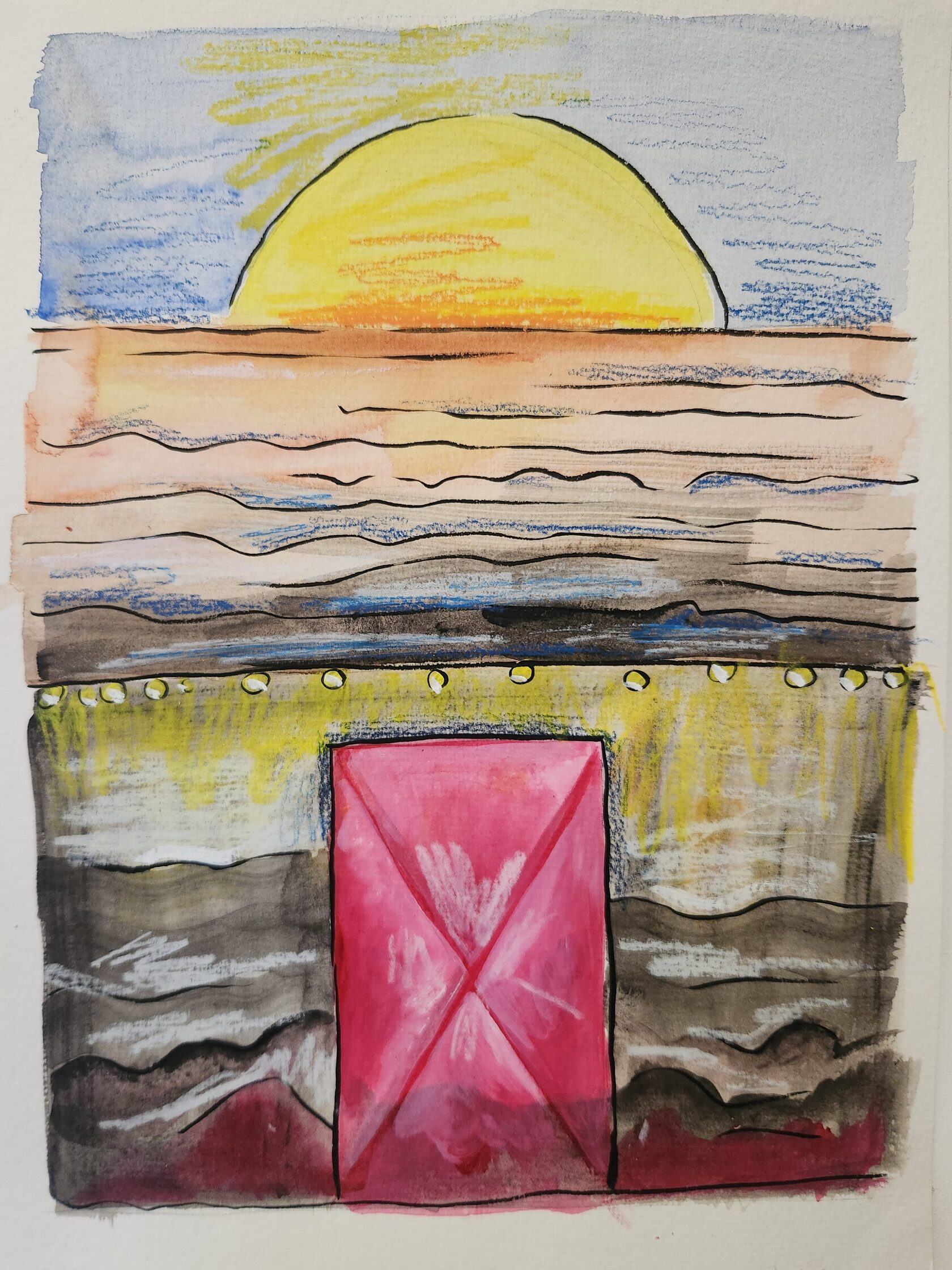
This painting above was created after visiting Pink Armenia. It reflects the many layers of secrecy, protection, and complexity surrounding the community, yet beneath it all, there is light. Bright, unwavering pink glows from underneath, symbolising hope, resilience, and a spirit that refuses to be dimmed.
I meet with the founder Mamikon Hovsepyan to witness the undercurrents, the stigmatised people forced to live lives of hiding who they are.
The conversation was eye-opening. While there has been some government support in the past, this shifted after the war with Azerbaijan. Many now leave for other parts of Europe, not only seeking acceptance, but escaping the pressure of living in a small country where news travels quickly, and family honour often takes precedence over individual freedom.
Violence and intimidation are real threats. Even dedicated LGBT+ spaces, like clubs, have been raided. When I arranged my visit, I wasn’t given the address until half an hour before arrival. I understood why. As I climbed the stairs inside the aprtment building, passing construction workers, I instinctively kept silent. Inside, there were no signs, only cameras and security. Safety is paramount. Mamikon shared that he had once been ordered to leave his apartment within a single day, simply for being gay.
Workplaces often aren’t supportive, and there’s little to no real help from the police. One example they gave: if your wallet is stolen as a “regular” citizen, you’re asked routine questions. But for someone in the LGBT+ community, irrelevant and invasive questions, such as “Are you a top or a bottom?” can replace basic investigation. It’s no surprise many avoid reporting crimes altogether.
Family rejection is common. Many never come out. There is an organisation specifically for mothers, who are often more supportive than fathers. Yet even they can face verbal or physical abuse from relatives who blame them for “raising” an LGBT+ child.
Pink Armenia receives no government funding, most of their resources come from across Europe. They offer free legal aid, social services, and mental health support, including volunteer psychiatrists who give their time to help people in crisis. Despite operating in secrecy within the confines of traditional Armenian values, there is a deep sense of pride and solidarity within this community.
Mamikon smiled as he told me their stories, and it was beautiful to hear his words. The reality here is one of constant discrimination, secrecy, and resilience, but also of courage, connection, and hope.
This painting above was created after visiting Pink Armenia. It reflects the many layers of secrecy, protection, and complexity surrounding the community, yet beneath it all, there is light. Bright, unwavering pink glows from underneath, symbolising hope, resilience, and a spirit that refuses to be dimmed.
